
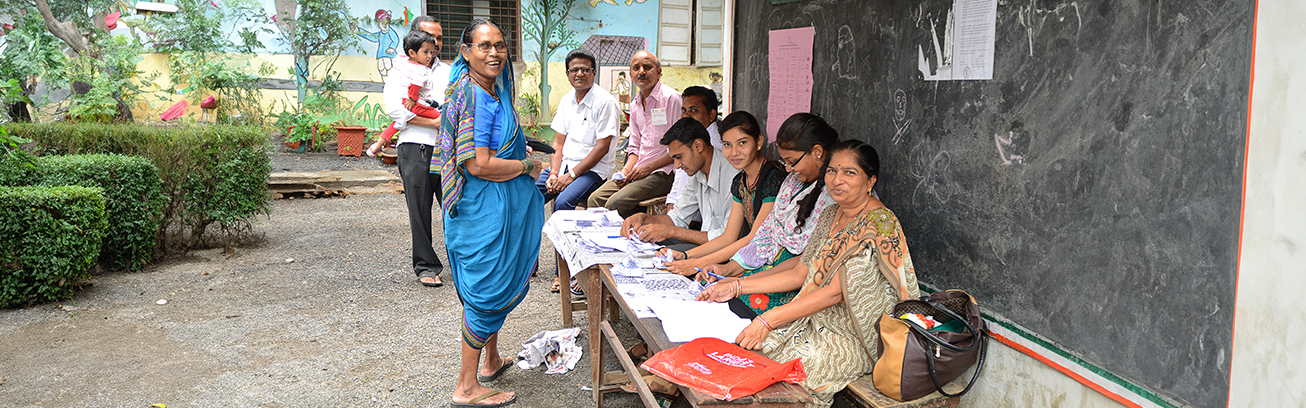
Social Audit

Scheme Implementation Review
- Verification of beneficiaries and fund allocation.
- Analysis of on-ground impact against objectives.

Stakeholder Consultations
- Community feedback and grievance redressal.
- Interviews and focus group discussions with stakeholders.

Data Collection and Verification
- Survey design and execution.
- Validation of records and documentation.

Impact Assessment Reports
- Preparation of detailed Audit findings.
- Recommendations for policy improvement.

Capacity Building Workshops
- Training local bodies on audit processes.
- Awareness programs for transparency and accountability.

Digital Tools for Social Audit
- Implementation of audit management systems.
- Development of mobile apps for field data collection.
How Can We Help (FAQs)
At InstaLogic, we believe our employees are the backbone of our success.
A Social Audit is an evaluation of how an organization’s actions impact people, communities, and the environment, and it checks whether commitments made for social well-being are genuinely fulfilled.
It ensures transparency, accountability, and measures real benefits created by an organization’s initiatives, and it is usually conducted by independent agencies, experts, or local bodies.
A Financial Audit verifies accounts and transactions, whereas a Social Audit evaluates real social outcomes, where one measures financial accuracy and the other measures social impact.
By displaying community impact,it strengthens credibility and public trust, and while not mandatory for all entities, many adopt it voluntarily for transparency.
Stakeholders gain verified insights into actual community benefits and responsible practices, and employees feel motivated and proud when working for an organization creating real social impact.
It tracks progress in environmental care, ethical practices, and long-term community outcomes, and this helps organizations align actions with sustainable growth.
They provide data, evidence, and support required during the evaluation process, and they also help interpret feedback and implement improvements afterward.
Effectiveness is measured through improvements in outcomes, beneficiary results, and measurable changes, and comparing planned objectives with actual results helps track success.
Related Insights
Transforming Insights into Action
Dashboard



Empowering Decisions
Visual Analytics Dashboard for MBOCWWB
View Case Study


Strengthening Compliance
Digital Platform Digitization of Cess Collection Portal
View Case Study
Assessment


Ensuring Effectiveness
Financial Impact Assessment for Mahajyoti & OBBW
View Case StudyWhat Our Clients Say
Digitization of CESS Collection Portal
M/s InstaLogic Solutions Pvt Ltd has delivered an exceptional online platform for CESS payments, transforming the collection, management, and monitoring of Building and Other Construction Workers Welfare (BOCW) CESS. The platform simplifies the payment process for contractors and CESS payees, enhances transparency, and streamlines operations for the Maharashtra Building and Other Construction Workers Welfare Board (MBOCWWB). Key features, such as secure user registration, tracking of payments, demand letter creation, and document uploads, have significantly improved efficiency and accountability. We deeply appreciate the expertise and dedication of the InstaLogic team in making this platform a valuable asset for the Board.

Maharashtra Building & Other Construction Worker Welfare Board
Visual Analytical Dashboard for Mahajyoti & OBBW Department
M/s InstaLogic Solutions Pvt. Ltd has successfully and efficiently executed the “Implementation, Operations, Hosting, Maintenance, & Support of Data Warehousing, Data Analytics, and Visual Analytics Platform” for the OBBW Department. Your team’s exceptional technical expertise and commitment were key to the successful end-to-end implementation of the platform. The project encompassed critical tasks such as requirements gathering, application development, user acceptance testing, procurement of Qlik licenses, data management, user training, and ongoing support. The platform has significantly enhanced the Decision Support System by enabling more effective monitoring and evaluation of various schemes, benefiting millions of beneficiaries. Your innovative approach has contributed to greater efficiency, transparency, and accountability, and we are confident this platform will remain a valuable asset for the department. We truly appreciate the dedication and professionalism displayed throughout the project and wish you continued success in all future endeavors.

Mahajyoti & OBBW Department
Visual Analytical Dashboard for Maharashtra Building & Other Construction Workers Welfare Board (MBOCWWB)
The developed product by M/s InstaLogic Solutions Pvt. Ltd. has provided substantial value to the MBOCWWB by equipping it with actionable insights through advanced Business Intelligence and Data Analytics, enabling data-driven decision-making and enhancing operational efficiency. The project encompassed the end-to-end development of a comprehensive Data Warehousing, Data Analytics, and Visual Analytics platform, flawlessly executed from initial requirements gathering to successful User Acceptance Testing (UAT). It also included the efficient procurement and integration of necessary software licenses, the establishment of robust data management practices, and comprehensive training for all end-users. Securely hosted and meticulously maintained, the platform benefits from a dedicated support team ensuring continuous operational availability, seamless updates, and prompt user assistance. These collective efforts by Instalogic have significantly improved the MBOCWWB’s ability to monitor welfare schemes, track worker benefits, and optimize resource allocation, ultimately enhancing service delivery and the effectiveness of welfare programs.